Bergamo, Italy. Born 1969.
I am the one who makes the walk.
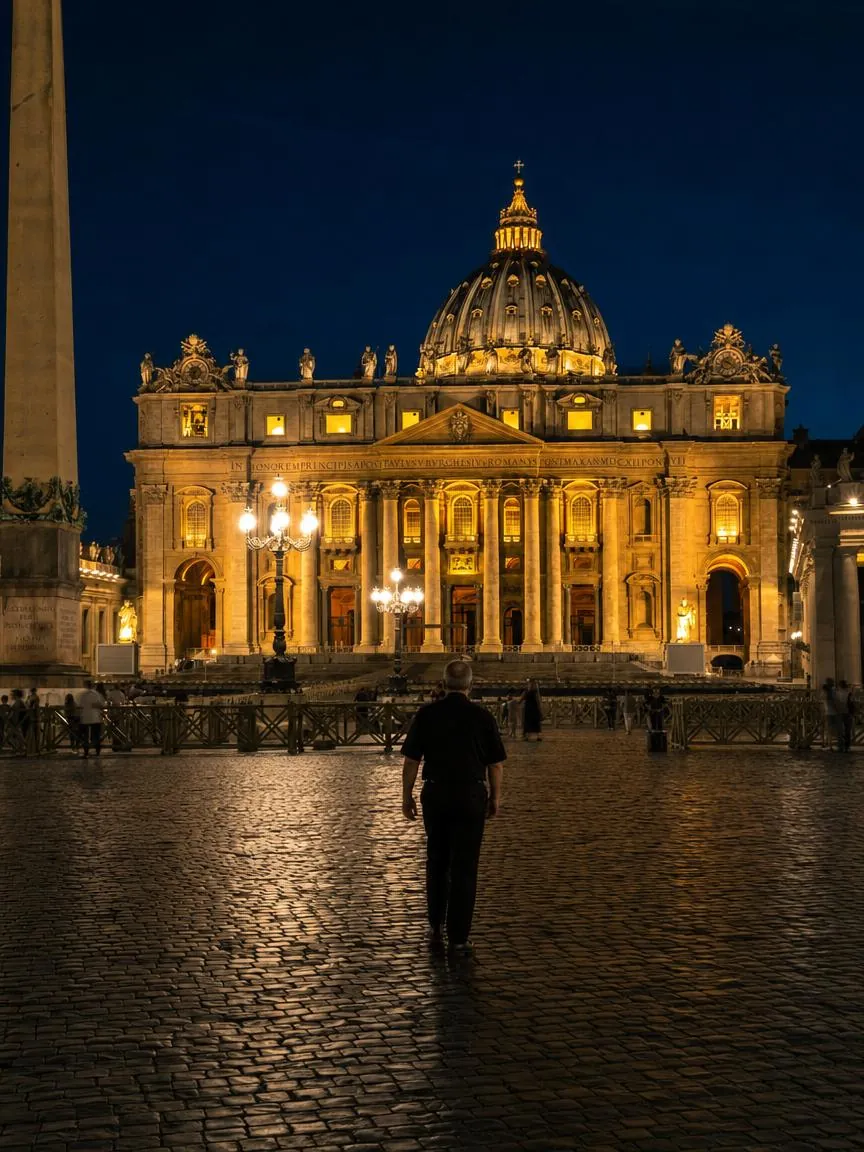
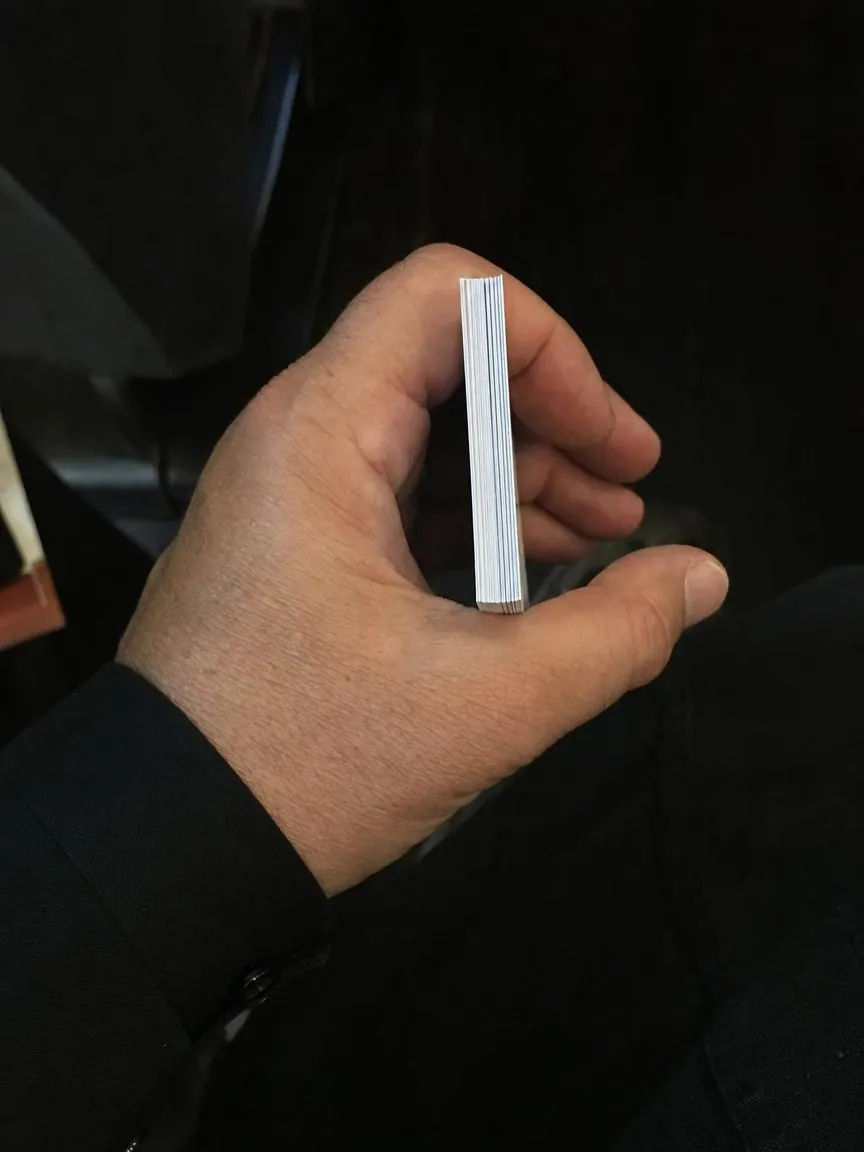
My name is Fr. Marco. Most mornings I walk into St. Peter's Basilica with a stack of cards in my breast pocket, and most mornings I walk out again with the stack thinner. Each of those cards has somebody’s name on it and somebody’s own words, printed in full, and not one of them was written by me.
I carry them because the people who wrote them could not make the walk themselves. That is the whole of what I do. This is how it started.
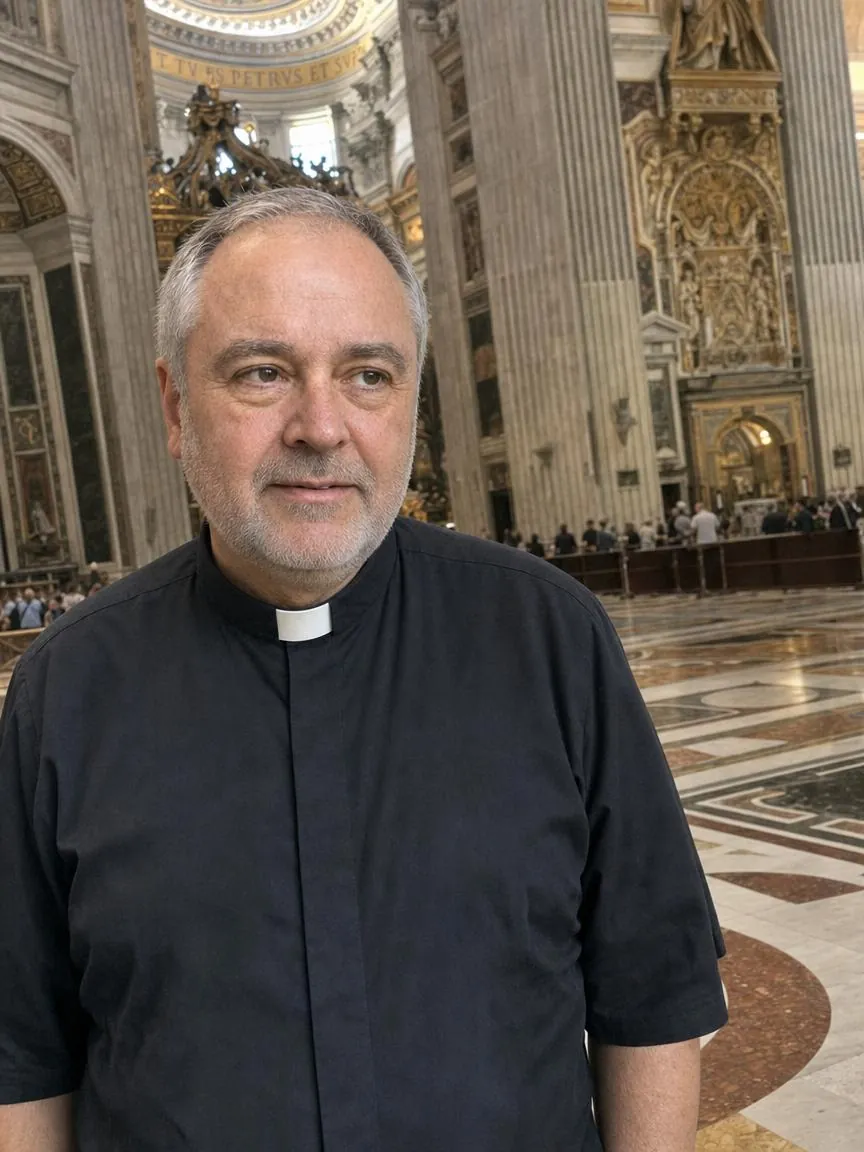
Before all of this
A stonemason’s son who knew the building first.
My father was a stone carver. Not an artist — a man with a chisel and a bad back and a cloth cap, who spent thirty years of his life on scaffolding with his hands in cold water, repairing things that were built to outlast him. Some of that work was in Rome.
When I was eleven he brought me in through the doors for the first time, on a weekday, before the crowds. I remember the floor more than anything. He put his hand on my shoulder and told me the stone under my feet had been walked on for five hundred years by people who were all now dead, and that it would still be walked on when I was one of them.
I did not think he was being profound. He was a stonemason; he thought in centuries because that was the material. But I have never once walked across that floor without hearing him say it.
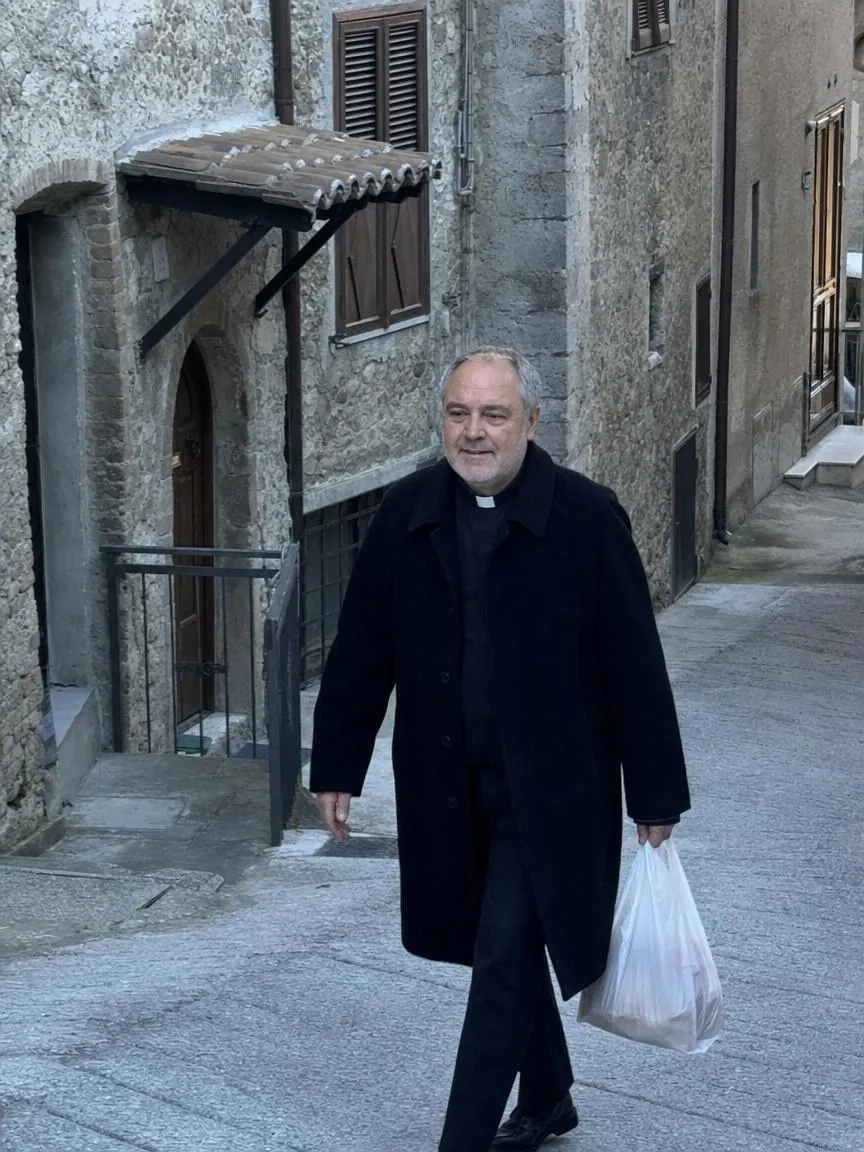
I was ordained in 1996 and I spent the next twenty-eight years in one parish. It is the best way to learn what people actually carry. Not in what they say to you — in what they stop just short of saying, in the long pause after a name, in which chair in the sacristy they choose to sit in.
Here is what I learned. Almost everybody is carrying something. Almost nobody has a way to set it down. And the people who carry the most are the ones least likely to ask anyone for anything.
The reason I cannot leave it alone
My mother wrote her prayers down for forty years. She never once delivered one.
My mother was called Emilia. She raised four of us in a flat with one window that faced the right way, and she prayed the way people of her generation did — without ceremony and without an audience.
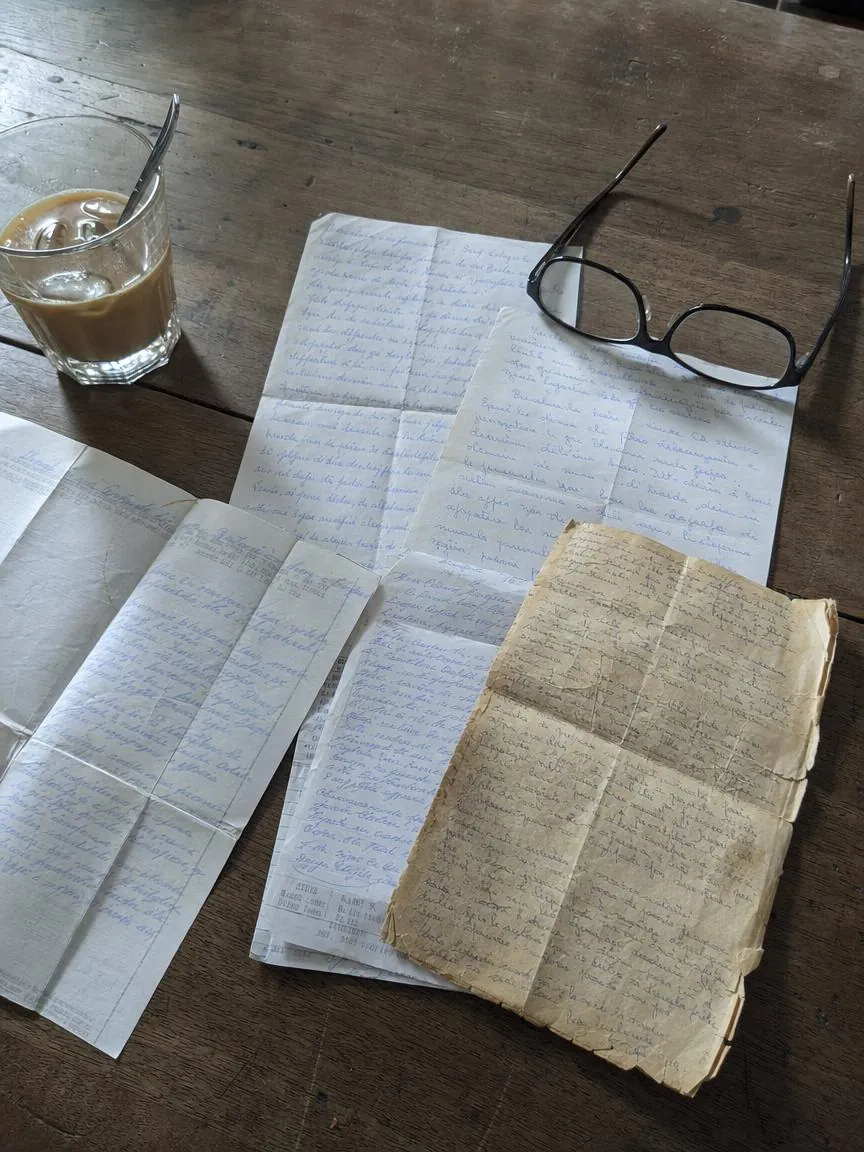
She wrote things down. Not in a journal; she was not that sort of woman. On the backs of supermarket receipts. On the inside of envelopes. On the blank half of a bill. Whatever was on the table when the thought arrived. Forty years of them, in a biscuit tin, in the back of the wardrobe, in blue ballpoint.
She died in 2019. It took us eleven days to clear the flat. I found the tin on the last one, and I sat on the floor with it and I read every single one of them.
She had prayed for all four of us by name, over and over, for decades. She had prayed for a neighbour whose son was ill. She had prayed for a woman in the market who had been rude to her once, which is the sort of thing that tells you everything about a person. And at the bottom of the tin there were prayers for me — written in the year I stopped believing I could do this work, which she never knew about, because I never told her.
Forty years of prayers, and not one of them had ever left that flat. She wrote them and kept them, the way you keep a letter you have no address for.
I took the tin with me. I still have it. And when I walk in, I carry hers with the others.
2021. A Mass I nearly missed.
She left it behind, and I never found her.
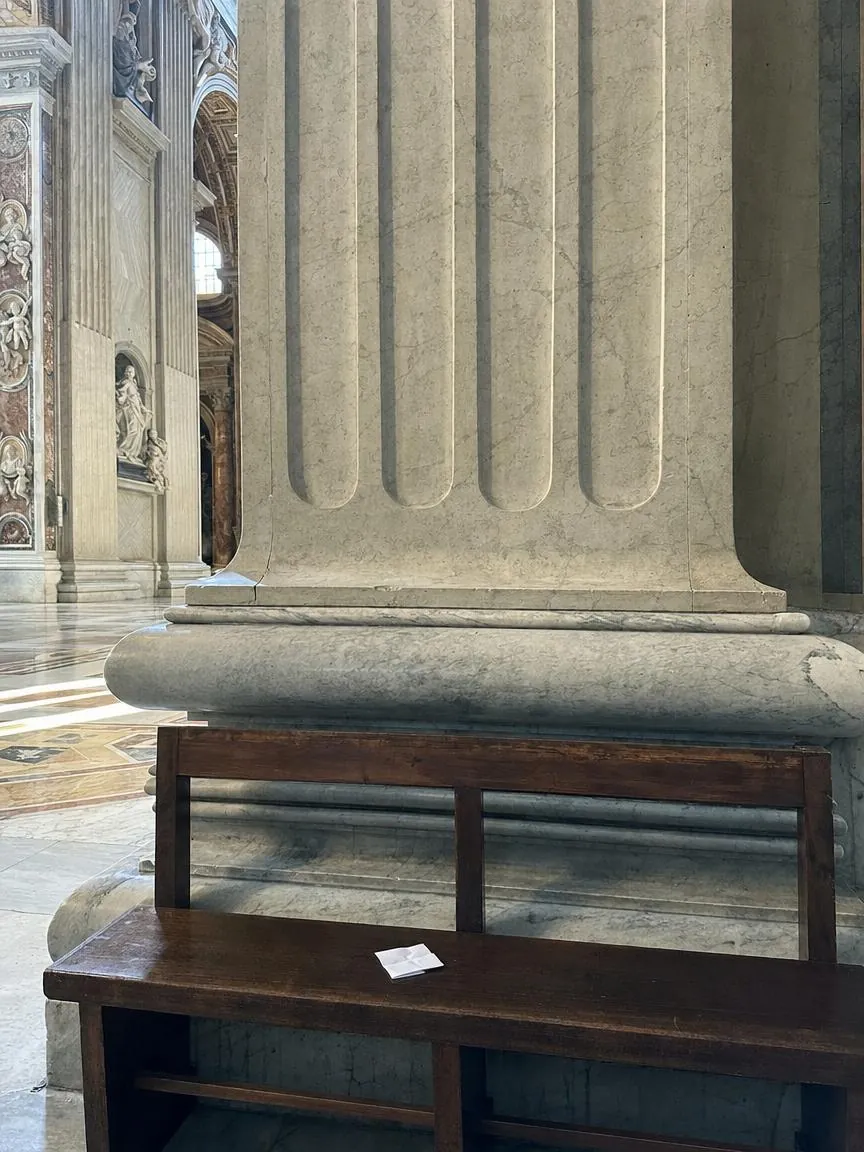
After a Mass one evening I noticed a folded card on the bench behind mine. I assumed she would come back for it. I put it in my breviary so it would be safe, and I waited.
It stayed in that breviary for eleven months. Not because I am forgetful. Because I could not bring myself to read somebody else’s prayer, and I also could not put it in a bin, and those two things left it exactly where it was.
When I finally opened it, it was a prayer for her daughter. Written out in full. Signed. Everything about it said it had been written by somebody who meant it and had then lost their nerve at the door.
I carried it in for her the next morning. I put it over the tomb of the Apostle and I stood there for a while and then I went home and I thought: she is one woman, in one church, in one city. How many people have this written down somewhere and no way to make the walk.
I looked for her. I asked at the parish office, I watched the benches for a while, I never found her. Her name is not on this page because it is not mine to put there. But her prayer is in, and it has been in since the morning after she left it.
The reason it became every morning
In 2023 I could not walk to the end of my own street.
I had a heart attack in November 2023, on a Tuesday, in the middle of a sentence. I was in hospital for nine days and then I was at home, looking at a wall, being told to take a short walk every day and getting no further than the corner.
Six months. That is how long it took before I could do the whole thing again — and I spent most of those six months thinking about the two hundred metres to the corner, because that was the entire world I could reach.
Here is what that taught me, and it is the reason this exists rather than staying a nice thing I did once for a stranger. I have spent my whole life inside walking distance of the place I love most in the world. Most people are not. Most people are stopped by a distance, or an illness, or an age, or a week that will not allow it, or a fear they cannot explain to anybody.
For six months I was one of them. I knew exactly what it felt like to want to make a walk and not be able to. And when I could walk again, I decided I was not going to make that walk for myself any more. I was going to make it for the people who cannot.
That was the beginning of the stack of cards in my pocket. Not a business and not a ministry. Just a man with working legs, and a biscuit tin, and a woman’s prayer that has been in since the morning after she left it.
What a walk actually looks like
Four hundred cards is a heavy pocket.
I start before the doors open properly. I do not go alone any more — which is a strange thing to write, and true: your card comes with me now, so in the ordinary sense of the word I am not carrying my own.
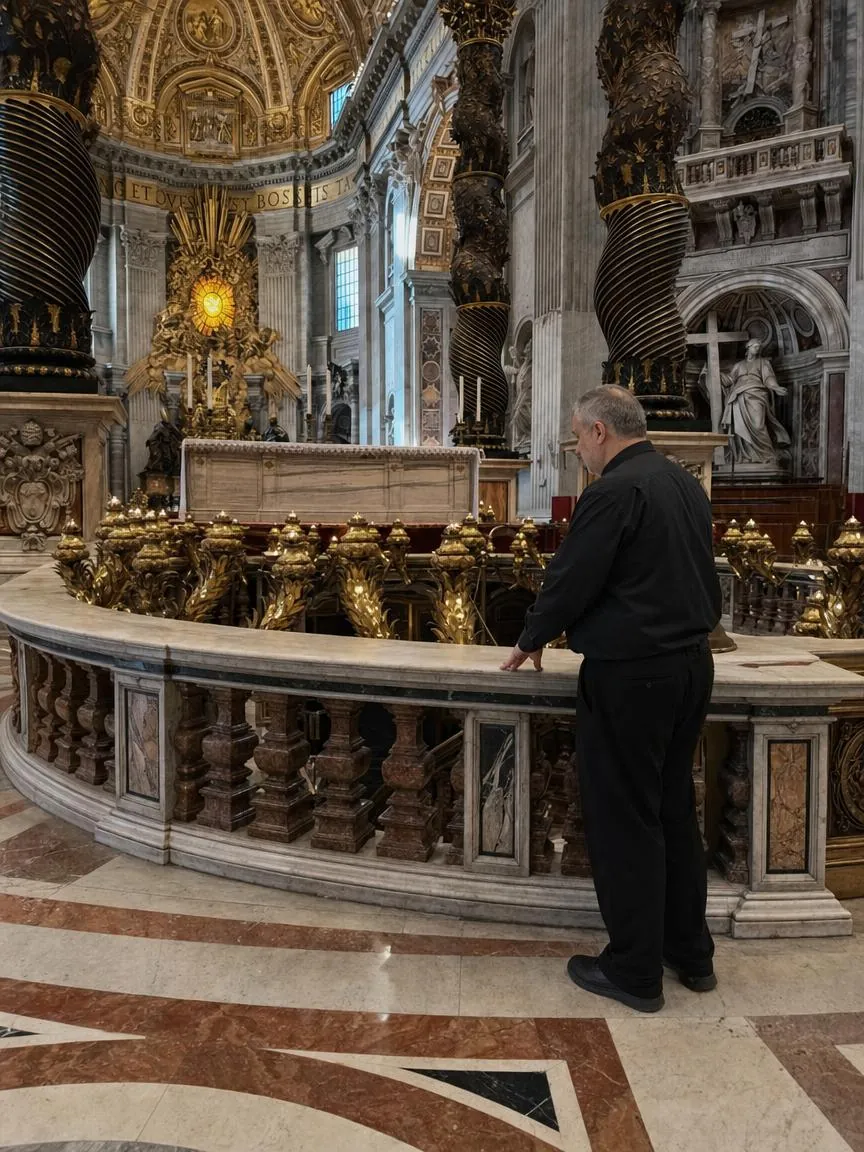
I set each one on our own card before I go. I read it once, on the way, because I cannot carry a prayer I have not read and I will not read it aloud. Then I hold it up over the tomb of the Apostle, long enough to mean it, and I photograph it exactly where it is — because the whole point of the photograph is that you never have to take anyone’s word for it, including mine.
Then I walk out and I carry the next one. That is it. That has been most mornings for a little over two years, and I have no plans to stop.
Fr. Marco
A servant of the prayers entrusted to me.
What I will not do
Four things I will not promise, told to you before you pay anything.
A man who tells you a story like the one above and then asks for money owes you the limits of what he is selling before the story does its work, not after.
- I cannot promise how God answers.
- Nobody can, and I will not pretend otherwise. I say this before I take anyone's money, and I will say it again here: I do not sell outcomes. What God does with a prayer is between the person who prayed and God.
- I do not read your prayer aloud.
- Not to anyone. Not for a photograph, not for a video, not as part of telling this story. I have carried people's most private words in my breast pocket for years and I have read every one of them. I have never read one out.
- I am not a priest of this basilica.
- I am a pilgrim chaplain. St. Peter's does not run this, does not employ me and has not asked me to do it. This is my own work, and the fee is a service fee rather than a donation.
- I do not promise a photograph tomorrow.
- I walk most mornings. Sometimes the basilica is closed, sometimes there is a Mass, sometimes my knees are bad and I go the next day instead. Your card goes in on the next walk I make, and you will see the photograph of it exactly where it was held.
The rest of it
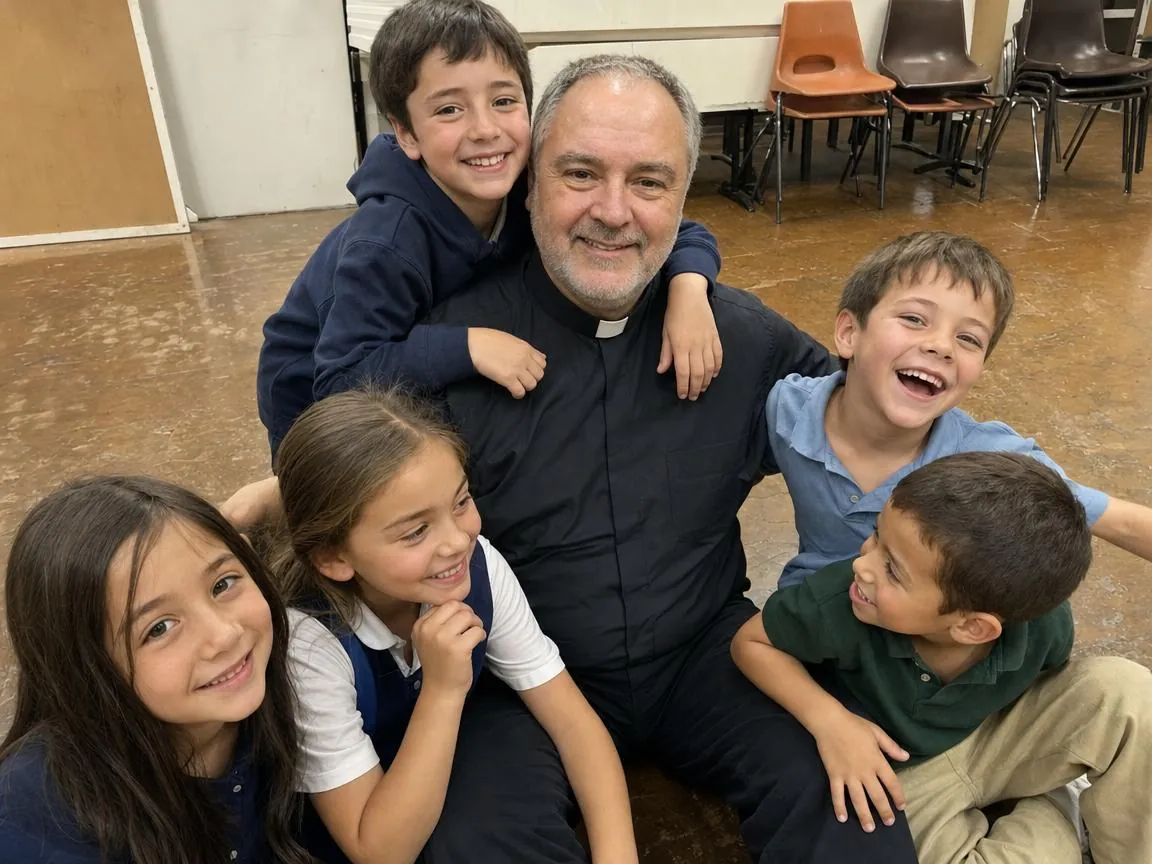
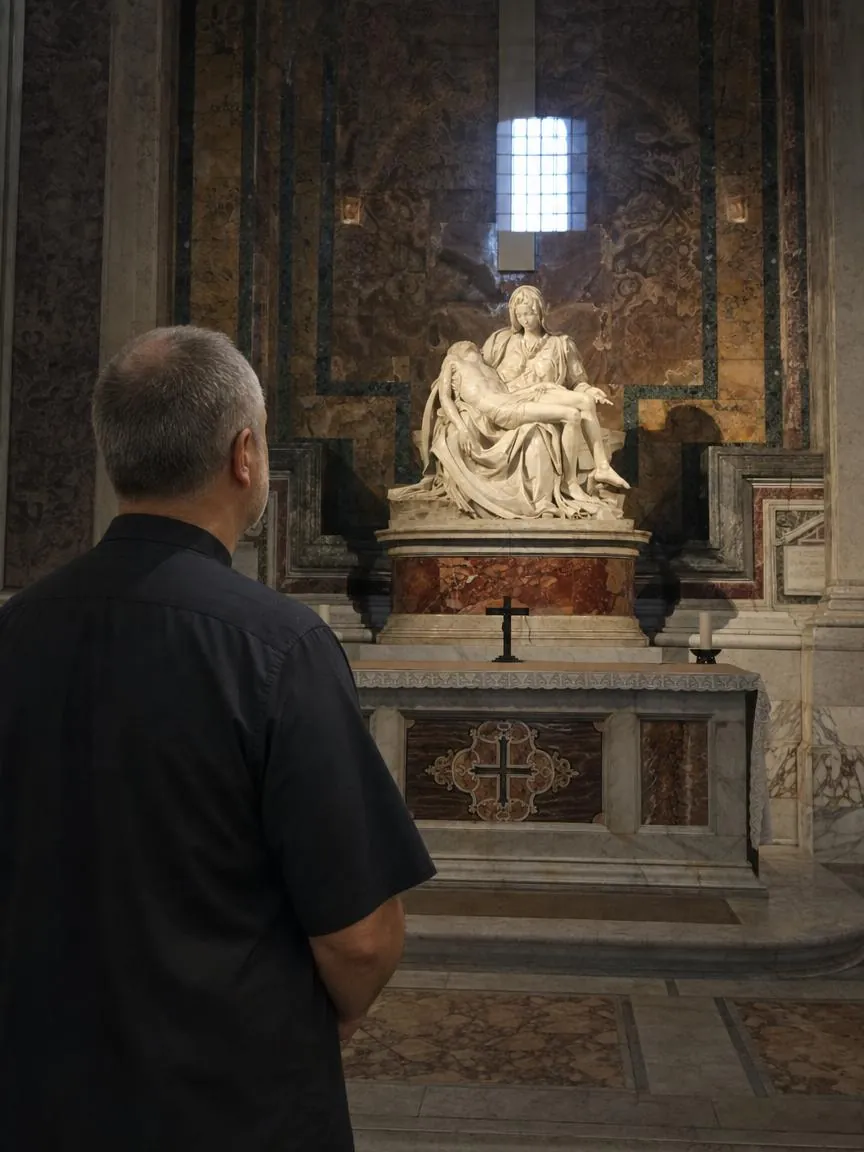
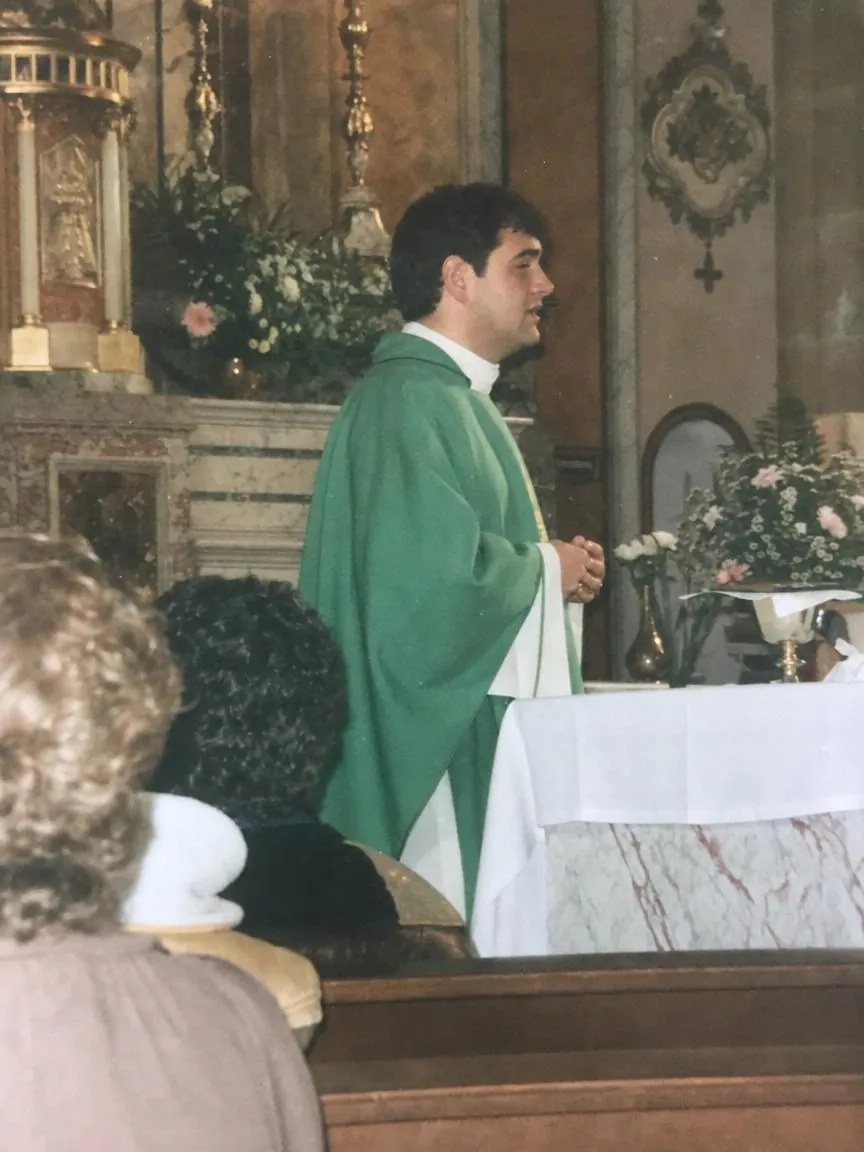
A life, in the pictures that got taken.
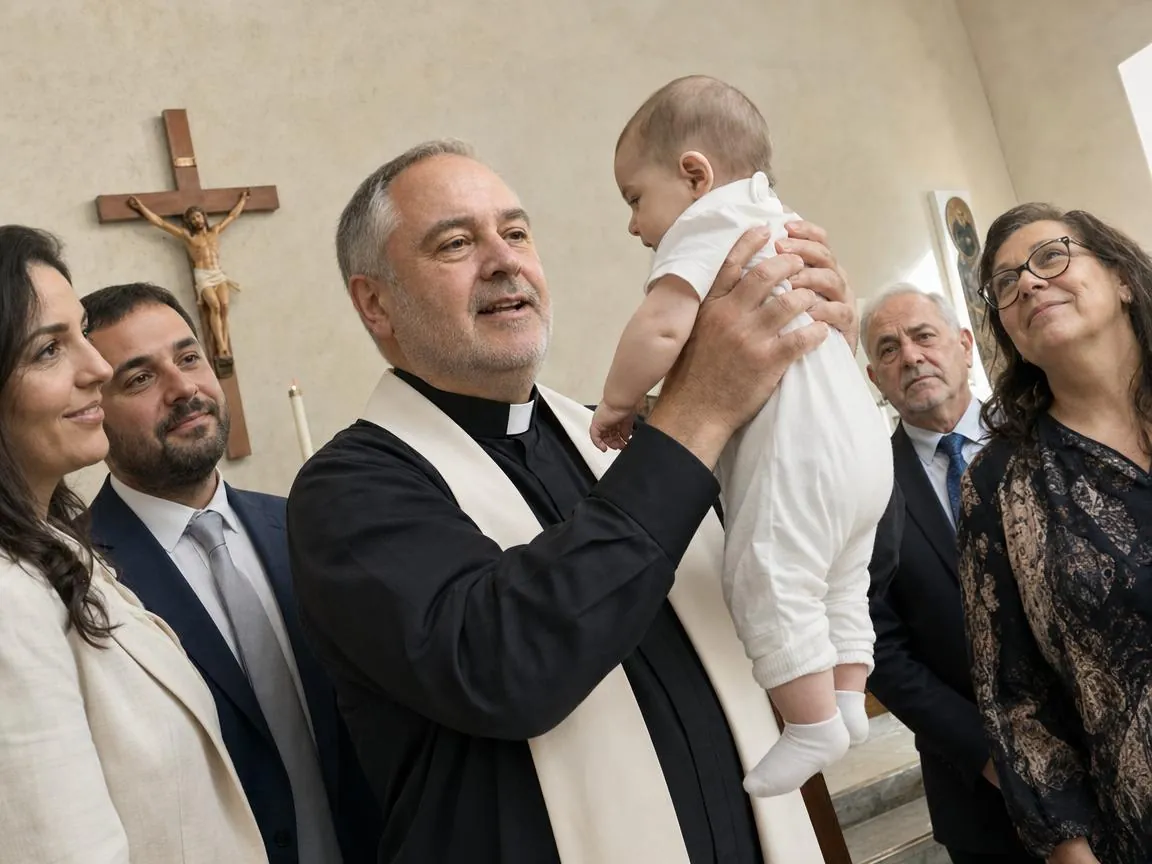
Christenings, kitchen tables, a hospital room, a parish hall floor, and the basilica on the mornings nobody needs anything from him.
If you have something written down, I will carry it in.
You do not have to make the walk. You have not been able to for a while, which is exactly why I am asking.
Four short questions, then you see your card before you pay anything.